1GW Dandara Solar Project in Upper Egypt Signs $650M Financing Agreement
27 October 2026Egypt has signed a preliminary financing agreement for the US$650 million Dandara Solar Power Project in Nagaa Hammadi, Qena Governorate, Upper Egypt, in a move aimed at supplying cleaner electricity to the country’s aluminum industry and strengthening its renewable energy infrastructure.
The agreement was signed on October 26, 2026, by Norwegian renewable energy developer Scatec and three multilateral development banks. These include European Investment Bank (EIB), European Bank for Reconstruction and Development (EBRD), and African Development Bank (AfDB).
The National Bank of Egypt will also acquire an equity stake in the project company, according to the Egyptian government.
The Dandara project will feature 1,000 megawatts (MW) of solar photovoltaic capacity. Dandara will also have a battery energy storage system (BESS) with a capacity of 200 megawatt-hours (MWh). Development is planned in two phases, each comprising 500 MW of solar generation and 100 MWh of battery storage.
The latest agreements also cover the project’s connection to Egypt’s national electricity grid. However, the financing arrangements remain at the preliminary-agreement stage. Further implementation and financial close requirements still need to be completed.
Dandara Solar Power Project to Support Egypt’s Aluminum Industry
One of the project’s defining features is its focus on supplying electricity to the Egypt Aluminium Company (EgyptAlum). The Dandara solar facility is expected to meet one-third of the EgyptAlum’s electricity requirements, helping reduce the carbon intensity of its energy-intensive aluminum production.
Aluminum smelting requires substantial and consistent electricity supplies. This makes power costs and reliability important factors in production economics.
Solar-Storage Co-location
By integrating battery storage with solar generation, Dandara solar project is designed to help make renewable electricity more useful to an industrial consumer whose demand cannot simply stop when sunlight fades. The storage system can also shift some electricity generated during daylight hours to periods of higher demand. However, the 200 MWh battery storage capacity has not been explicitly said to provide continuous power to the entire aluminum complex.
The solar power development also comes as the European Union’s Carbon Border Adjustment Mechanism (CBAM) enters its definitive phase in 2026. For Egyptian aluminum exports exposed to European markets, reducing production-related emissions could also become increasingly important to maintaining competitiveness as carbon costs and requirements continue to affect trade. Ultimately, lower-emissions aluminum production could help EgyptAlum manage the implications of the EU’s CBAM.
By extension, the Dandara solar and battery storage project links renewable energy investment with industrial decarbonization. Industry-wise, the project is at the center of export-market resilience. It offers a model for supplying large industrial facilities through dedicated renewable power arrangements.
Dandara Solar Power Project to be Developed in Two Phases
The planned 1 GW facility will be delivered in two 500 MW phases, each paired with 100 MWh of battery storage. This phased approach allows the overall development to be divided into separate construction and commissioning packages.
The project is located in Nagaa Hammadi, an industrial area in Qena Governorate. Its proximity to the EgyptAlum complex is also relevant because the development is intended to serve the complex. This will be alongside adding generation capacity to the grid.
The National Bank of Egypt’s planned equity participation also introduces a domestic financial institution into the project company’s ownership structure.
EIB, EBRD and AfDB are expected to play important roles in mobilizing capital for the project. Additionally, their participation reflects the continuing importance of development finance institutions in supporting large-scale renewable energy developments. This is particularly true in markets where projects require substantial upfront investment and long-term financing arrangements. An example of this would be the $6.1 billion renewable energy project by Masdar in Abu Dhabi which is also the first giga-scale facility in the word capable of delivering uninterrupted clean electricity 24 hours a day.
Dandara Advances Egypt’s Renewable Energy and Industrial Development Plans
Dandara solar power project also supports Egypt’s wider ambition to increase renewable energy’s contribution to electricity generation to 42% by 2030. It also complements the country’s efforts to diversify its electricity supply. The project will also help reduce exposure to fossil-fuel costs and attract investment into clean energy infrastructure.
The battery storage also makes additional solar capacity more useful to the electricity system. Solar generation is concentrated during daylight hours, while electricity demand continues into the evening. Integrating storage can help address this mismatch. However, the system’s effectiveness will depend on its power rating, dispatch arrangements and operating strategy.
For Egypt, the project’s industrial offtake model is also particularly significant. A long-term arrangement to supply electricity to a major industrial manufacturer can provide greater revenue visibility for a renewable energy development. This is while giving the industrial consumer a route to more predictable electricity costs and lower-emissions production.
Expected Project Milestones
The next important milestones will be the completion of financing arrangements and confirmation of construction and procurement schedules. This will mark progress towards delivering the two construction phases.
Related
-
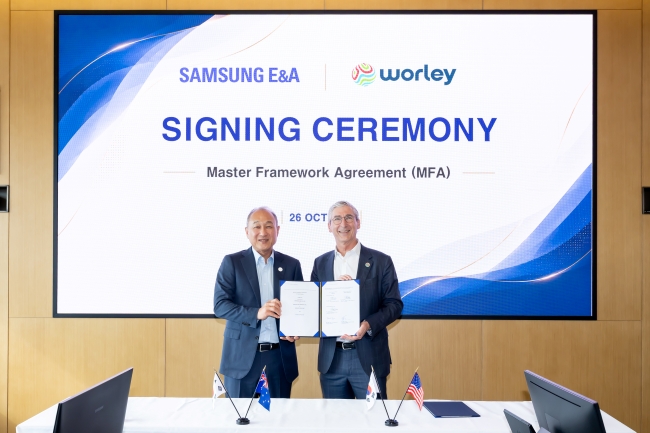
Worley and SAMSUNG E&A partner on selected major projects in the US
27 October 2026
-

SpaceX secures $40bn in debt financing, Elon Musk says
27 October 2026
-

Aramco selects contractors for five offshore tenders
27 October 2026
-
Nakheel awards $259m Dubai Islands buildings contract
27 October 2026
-
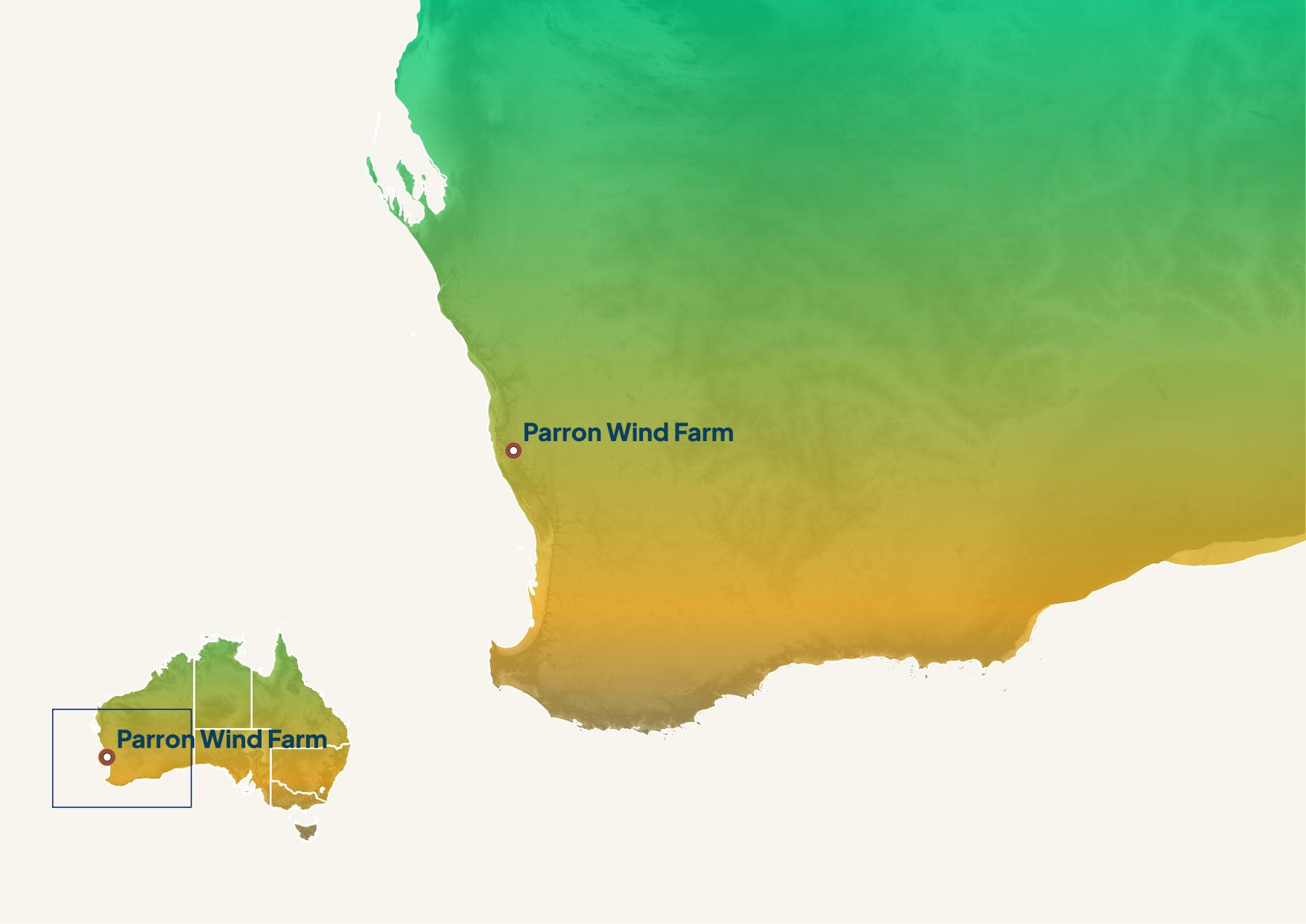
Parron Maam Marang, Western Australia’s Biggest Wind Farm Starts Construction, Eyes 2028 Completion
27 October 2026
-
Verizon signs $2bn AWS AI infrastructure deal
27 October 2026
You might also like...
-
Parron Maam Marang, Western Australia’s Biggest Wind Farm Starts Construction, Eyes 2028 Completion
27 October 2026
-

ERM Appointed by Bute Energy to Support 368.5MW Lan Fawr Wind Project
27 October 2026
-

Petrovietnam, CIP sign agreement to develop $4bn wind project
27 October 2026
-
Axpo and Fortia Sign Second 10-Year Wind PPA for Votorantim Cimentos
26 October 2026
-

ENNA Solar acquires Romanian Medgidia project: 166 MWp of solar and 612 MWh
26 October 2026
-

QatarEnergy and TotalEnergies to develop Lebanon solar plant
23 October 2026


 京公网安备
11010802030424号
 京ICP备19046776号-2