Giga Energy secures $1 billion lease for 60 MW AI data center in Texas
18 November 2026This content is the exclusive copyright of Construction Review Online (constructionreviewonline.com). Original URL: https://constructionreviewonline.com/giga-energy-secures-1-billion-lease-for-60-mw-ai-data-center-in-texas/. © 2026 Group Africa. All rights reserved. Unauthorized reproduction, scraping or republication is strictly prohibited and constitutes wilful copyright infringement. If you are reading this on any site other than constructionreviewonline.com, the content has been stolen.
Giga Energy has secured a 10-year, $1 billion lease with an undisclosed U.S.-based AI cloud provider for a 60-megawatt (MW) data center under development in Hunt County, Texas, as the company introduces its modular GigaBase system for large-scale AI infrastructure deployment.
The agreement covers Project Clay, an approximately 30-acre AI data center campus that Giga Energy began constructing in July 2026. The company will develop, own and operate the facility for the customer, with service scheduled to begin in spring 2027.
Announced on November 17, the deal gives Giga Energy a long-term customer commitment for the development ahead of its planned completion. The $1 billion figure represents the stated value of the 10-year lease, not the disclosed construction cost of the facility.
Also Read
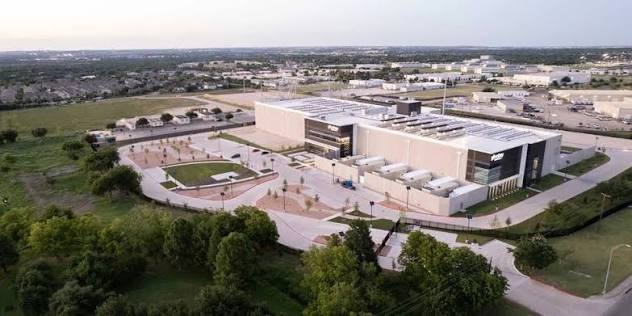 Sabey Data Centers signs 10-year Texas solar agreement covering 43.5 MW
Giga Energy has not identified the tenant or disclosed the detailed commercial terms of the agreement.
Also Read
 $74 Billion SpaceX Data Center Projects to Transform AI Infrastructure in Arizona and Texas
The project also marks the company’s introduction of GigaBase, a factory-first development model that combines off-site manufacturing with parallel construction activities to accelerate data center deployment.
Also Read
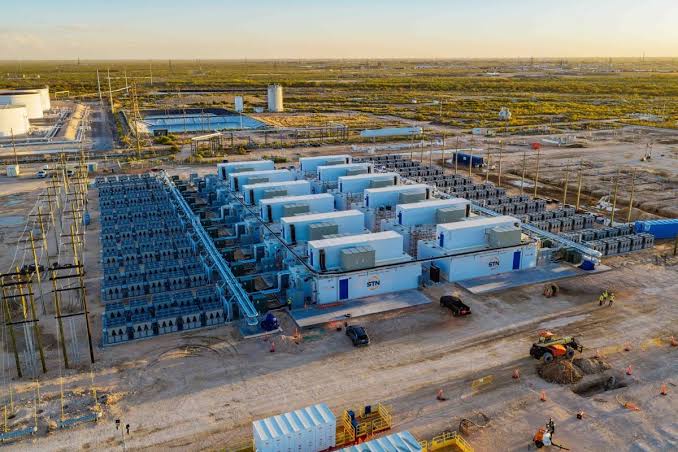 STN One Advances Odessa AI Data Center Campus With 400MW Initial Deployment Plan
Project Clay targets 300 construction jobs and 24 permanent positions
Giga Energy expects Project Clay to create approximately 300 construction jobs during the development phase and 24 permanent full-time positions once the facility becomes operational.
The company estimates annual salaries for permanent employees will range from $116,000 to $180,000.
Giga Energy also expects the campus to generate millions of dollars in recurring annual tax revenue for Hunt County. The company says the additional revenue will support public schools, infrastructure, emergency services and other local government services.
However, it has not disclosed a specific annual tax contribution or provided a detailed breakdown of the projected revenue among the county and other taxing jurisdictions.
The eventual contribution will depend on the facility’s assessed value, applicable property tax rates and any tax incentives or exemptions.
The employment projections also distinguish between temporary construction work and the smaller permanent workforce required to operate the completed facility.
Brent Whitehead, president and co-founder of Giga Energy, said the company intends to make local economic benefits part of its data center development approach.
“We believe AI infrastructure should leave a community stronger than it found it. That means creating high-paying jobs, expanding the local tax base, and making long-term investments that benefit residents for decades,” Whitehead said.
Dedicated electrical infrastructure designed to limit pressure on local utilities
Project Clay will incorporate new electrical infrastructure that Giga Energy says will tap underutilized capacity on dedicated power infrastructure in Hunt County.
The company designed the arrangement to avoid drawing on distribution capacity serving existing homes and businesses.
The approach addresses a growing concern surrounding large data center developments in Texas, where rapidly increasing electricity demand has intensified discussions about grid capacity, infrastructure investment and the allocation of electricity costs.
Giga Energy says its development model places the responsibility for dedicated infrastructure on the project rather than shifting additional distribution-system pressure onto existing residential and commercial customers.
However, the company has not identified the electricity supplier, disclosed the project’s expected annual electricity consumption or provided the full technical details of its connection arrangement.
The distinction matters because dedicated electrical infrastructure does not necessarily mean a data center operates independently of the wider electricity grid. The arrangement instead concerns how the facility connects to and uses available electrical capacity.
Closed-loop cooling limits local water requirements
Water consumption is another major consideration in Project Clay’s design.
Rather than relying on open-loop evaporative cooling, the facility will use a closed-loop system to circulate cooling fluid through its IT equipment without depending on continuous municipal or groundwater withdrawals for cooling operations.
Giga Energy says the only local water consumption will come from employee sinks and bathrooms, estimating annual usage equivalent to approximately two households.
The system is designed to address concerns over the water requirements of large data centers, particularly in regions where competition for municipal supplies and groundwater resources is becoming increasingly important.
However, closed-loop cooling does not mean the facility contains no water or requires no cooling infrastructure. The cooling fluid circulates through the system, while equipment such as chillers transfers heat away from the computing infrastructure.
Giga Energy’s claim specifically concerns the facility’s limited reliance on local water supplies for cooling.
The company has not published a detailed engineering breakdown of the cooling system or an independently verified water-consumption assessment for Project Clay.
GigaBase introduces factory-first modular data center construction
Project Clay also serves as the first announced development associated with Giga Energy’s GigaBase system.
The company developed the model to address construction delays, equipment procurement challenges and the labor requirements associated with conventional data center development.
Instead of manufacturing and assembling all major infrastructure components at the project site, Giga Energy produces much of the facility’s equipment in its factories in Long Beach, California, and Houston, Texas.
Site preparation and module manufacturing can then proceed simultaneously, reducing the amount of work that must take place sequentially during construction.
GigaBase incorporates modular computing infrastructure, electrical equipment, battery backup systems, transformers, diesel generators and cooling equipment.
Its design also incorporates air-cooled chillers and a closed cooling-water loop, allowing the system to reject heat without relying on conventional evaporative cooling towers.
Giga Energy says the factory-first approach can reduce development timelines substantially, targeting approximately nine months from initial site development to energization compared with conventional projects that can take 18 months or longer.
The company also claims that moving most manufacturing and assembly work off-site can reduce field labor requirements by up to 90%, limit truck movements and minimize disruption to surrounding communities.
These are company-reported performance targets rather than independently verified results from Project Clay.
The Hunt County development will provide an important commercial test of the model. Giga Energy broke ground in July and expects the facility to enter service in spring 2027, giving it a relatively short construction and commissioning window.
Delivering the project on schedule will require coordination across factory manufacturing, site preparation, equipment installation, electrical connections and commissioning.
Giga Energy expands its AI infrastructure development business
Giga Energy operates as a manufacturer, developer and operator of modular AI data centers.
The company says it has delivered more than 7 gigawatts (GW) of electrical infrastructure and has more than 258.5 MW of critical IT capacity completed or under development.
Its business model combines equipment manufacturing with data center development and operations, allowing it to manage several stages of infrastructure delivery rather than relying entirely on separate suppliers and contractors.
Project Clay extends that model through a long-term lease with an AI cloud provider, giving Giga Energy responsibility for developing and operating the facility while the customer obtains access to its computing infrastructure.
The agreement also comes as AI infrastructure developers face pressure to deliver capacity faster while addressing concerns about electricity availability, water consumption and the financial impact of large developments on host communities.
For Giga Energy, the $1 billion lease provides a substantial commercial commitment behind its modular data center strategy. The next test will be whether Project Clay meets its spring 2027 service target and demonstrates that the GigaBase model can deliver the construction speed and resource efficiencies the company promises.
The wider industry is also exploring other ways to address the environmental impact of data center expansion. Sabey Data Centers, for example, has signed a 10-year virtual power purchase agreement covering 43.5 MW of renewable generation from an operating Texas solar project as it works toward a 2029 net-zero emissions target.
Related
-

Following the offer webuild will hold 50.28% of Trevi share capital
18 November 2026
-

GE Vernova strengthens German wind energy expansion with new order from wpd
18 November 2026
-

Macquarie Data Centres eyes 200MW campus in Sydney, Australia
18 November 2026
-

Quaise Energy signs 50-MW PPA with Google for superhot geothermal power
18 November 2026
-

A.P. Moller Capital acquires Mainstream Renewable Power South Africa
18 November 2026
-

B5Plus Group selects Danieli Centro Combustion for reheating furnace at new long-product complex
17 November 2026
You might also like...
-
Macquarie Data Centres eyes 200MW campus in Sydney, Australia
18 November 2026
-

Expansion of Non-Ferrous Metal Exploration Claims in Alaska, United States, and Additional Funding Contribution
17 November 2026
-

Conclusion of Option Agreement for Non-ferrous Metal Joint Exploration Project in Manitoba, Canada
17 November 2026
-

GeZero: Implementation of the CO₂ capture project paused – Geseke site remains important
17 November 2026
-

Con crédito del BID se instalará 70 mil luminarias LED en seis departamentos para beneficio de un millón de personas
17 November 2026
-

South Africa’s Rietberg copper mine revival reaches main ore zone
17 November 2026


 京公网安备
11010802030424号
 京ICP备19046776号-2