Hyundai E&C Signs Five-Year Agreement for 240-MW FANCO Small Modular Reactor
4 November 2026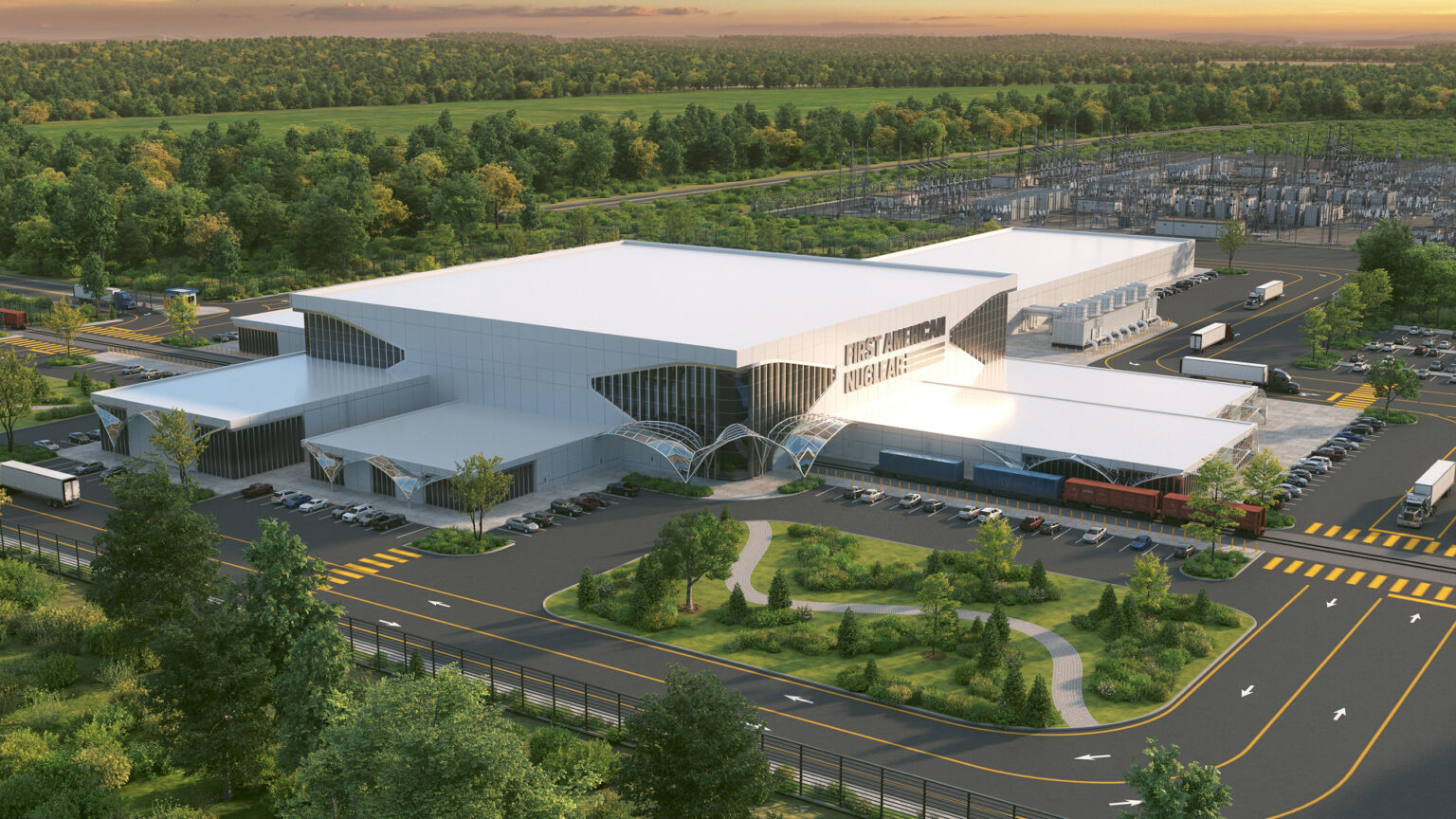
Hyundai Engineering & Construction has signed a five-year agreement with U.S. nuclear developer First American Nuclear Co. (FANCO) to provide engineering and construction expertise for its 240-megawatt EAGL-1 small modular reactor (SMR), establishing an early role in a project that could eventually expand its presence in the U.S. nuclear market.
Hyundai E&C announced the agreement on November 2, 2026, following its signing at the company’s Seoul headquarters on October 30. The agreement builds on a framework agreement the two companies signed in July and establishes the terms for a longer-term engineering partnership.
The deal does not include a construction contract or a disclosed contract value. Instead, it establishes a five-year framework under which Hyundai E&C will conduct constructability reviews, provide design and engineering advice, and offer technical feedback on construction-related matters. Specific work scopes and fees will be determined through individual task orders. The agreement may be extended by mutual consent.
Hyundai E&C Joins EAGL-1 During Early Design
Hyundai E&C’s involvement begins during the early design phase, giving the South Korean contractor an opportunity to contribute its engineering, procurement and construction (EPC) expertise before the project reaches construction.
The company said the agreement strengthens its prospects of participating in the project’s eventual construction. However, the current contract does not guarantee that role, and FANCO has not disclosed a construction award or a confirmed deployment schedule.
The agreement also reflects Hyundai E&C’s efforts to expand beyond conventional large nuclear power plants into next-generation reactor technologies. For FANCO, the partnership brings an experienced international construction contractor into the project before detailed engineering and construction decisions are finalized.
EAGL-1 Targets Data Centers and Industrial Power Demand
FANCO is developing EAGL-1 as a liquid-metal-cooled fast reactor using a lead-bismuth alloy as its coolant. The reactor is designed to generate approximately 240 megawatts of electricity per unit. Its modular configuration is intended to allow multiple units to be deployed together as power demand grows.
The company is targeting large data centers and industrial facilities, where demand for reliable electricity is increasing. FANCO’s proposed Bridge Power approach would use conventional power generation to meet initial electricity needs while preserving infrastructure for a later transition to nuclear generation.
On October 27, FANCO said it had submitted a technical justification to the U.S. Nuclear Regulatory Commission (NRC) outlining how certain conventional power-generation infrastructure could be installed under existing regulations before approval of a nuclear reactor construction permit. The submission advances FANCO’s proposed deployment strategy; it does not constitute NRC approval of EAGL-1 or authorization to construct the reactor.
The approach could allow FANCO to begin supplying electricity before the reactor is ready, but the company has not disclosed a confirmed project site, construction schedule or commercial operation date.
Regulatory and Commercial Milestones Remain Ahead
FANCO has submitted a regulatory engagement plan to the NRC as part of its efforts to establish a pathway toward commercial deployment. The company has also described plans for a phased power-generation strategy, with conventional infrastructure preceding the nuclear component.
The next significant milestones will be the definition of EAGL-1’s specific engineering scope, progress through the NRC’s regulatory process, and any subsequent construction contract or project deployment announcement. Until those steps are confirmed, Hyundai E&C’s agreement represents an early engineering partnership rather than a commitment to build the reactor.
First of it kind
EAGL-1 is a fast-spectrum small modular reactor design based on a liquid metal fast reactor system using lead-bismuth coolant. The design targets an electrical output of about 240 megawatts per unit and is intended for clustered deployment of multiple reactors at a single site.
The reactor is designed to operate within existing U.S. licensing rules. A review conducted under a Department of Energy-supported program by Pacific Northwest National Laboratory concluded that the concept could be licensed under current regulatory criteria, pending further technical development.
The system uses a non-pressurized configuration with passive decay heat removal and is designed to eliminate the need for operator intervention in shutdown cooling scenarios. The fuel design uses high-assay low-enriched uranium dioxide.
The company is also developing a lead-bismuth test loop intended to provide physical performance data for regulators during the review process.
The project incorporates a separation between the nuclear steam supply system and the balance of plant, which includes turbines and electrical generation equipment. The balance of plant is designed to use commercially available components.
A bridge power approach allows initial electricity generation using conventional gas-fired systems while the nuclear licensing process is ongoing. The system is designed to transition to nuclear operation once approval is granted.
EAGL-1 design
The EAGL-1 design targets an electrical output of approximately 240 megawatts per unit, with planned deployment in multi-reactor clusters of four to six units. At full configuration, a single site could generate enough electricity to supply up to 1.5 million homes, positioning the project within the utility-scale segment of the nuclear market rather than smaller pilot applications.
The reactor system is designed for factory fabrication and shipment as pre-assembled modules, with the nuclear steam supply system fully assembled and tested prior to delivery. The balance of plant will rely on commercially available components, a configuration intended to standardize construction, reduce on-site complexity, and support repeatable deployment across multiple locations.
The project involves collaboration with engineering and academic partners, including AtkinsRéalis and Purdue University, along with support from state-level industrial development programs in Indiana.
The regulatory engagement plan includes a phased submission schedule covering safety criteria, fuel qualification, thermal hydraulics, and risk assessment, supported by regular technical meetings with the NRC.
Additionally; the development reflects broader momentum in U.S. nuclear innovation, with several independent projects progressing through regulatory and construction pathways across different states, including developments such as Kairos Power’s Hermes 2 reactor project in Oak Ridge, Tennessee.
Also, the development comes as other U.S. projects explore different ways to power AI infrastructure. In Pennsylvania, the former Homer City Generating Station is being redeveloped into a 4.5-GW natural gas-powered energy campus to support a major data center development, highlighting an alternative to FANCO’s proposed nuclear-powered approach.
Related
-

Cairo Metro Line 2 Upgrade Prequalification Opens for $650m Modernization
4 November 2026
-

RWE commissions 47.2 MW onshore wind farm in southern Italy
4 November 2026
-

Turkey Awards 1,500 MW of Wind Capacity in Seven Zones After 29 Bids
3 November 2026
-

Oman announces $790m industrial investment deals
31 October 2026
-
Benin secures financing for first solar IPP projects
31 October 2026
-

Rio Tinto inaugurates $985m Argentine lithium operations
31 October 2026
You might also like...
-
RWE commissions 47.2 MW onshore wind farm in southern Italy
4 November 2026
-
Turkey Awards 1,500 MW of Wind Capacity in Seven Zones After 29 Bids
3 November 2026
-
Benin secures financing for first solar IPP projects
31 October 2026
-

COMSA contributes to the electrification and modernisation of the Algarve Line in Portugal
30 October 2026
-
Construction begins on Chereh floating solar PV project in Malaysia
30 October 2026
-

$1.4 BILLION INVESTMENT FROM KALYON SOLAR TECHNOLOGİES FACTORY FOR DOMESTIC AND RENEWABLE ENERGY
30 October 2026


 京公网安备
11010802030424号
 京ICP备19046776号-2