World Bank lifts ban on nuclear funding in developing countries
16 June 2025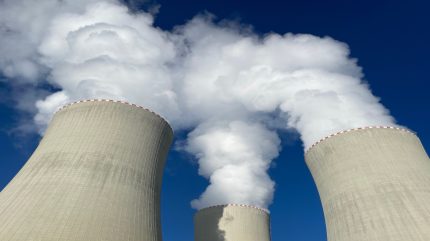
The World Bank lifted its long-standing ban on financing nuclear energy projects in developing countries in a move aimed at addressing growing electricity demands, as reported by Reuters. This is a significant change from the institution’s 2013 decision to halt nuclear project funding.
The bank, known for providing low-interest loans for infrastructure development, is now aligning its energy strategy to support the anticipated doubling of electricity demand in developing nations by 2035.
This will necessitate an investment surge from the current annual $280bn to meet the growing need for generation, grids and storage.
World Bank president Ajay Banga has been advocating for an “all of the above” energy approach since his appointment in June 2023, pushing for a broadened energy portfolio to help countries progress and achieve their development targets.
The World Bank Group plans to collaborate with the International Atomic Energy Agency to enhance advisory services on nuclear non-proliferation, safety and regulatory frameworks, supporting the extension of existing nuclear reactors’ life and the advancement of small modular reactors.
While the nuclear energy funding received swift approval from the board, the stance on upstream natural gas projects remains contentious, with several countries expressing reservations.
Banga stated that further discussions are needed to reach a consensus on this matter.
The US, the largest shareholder in the World Bank, has been advocating for an end to the nuclear funding ban. This stance aligns with President Donald Trump’s withdrawal from the 2015 Paris Climate Agreement.
The bank’s new direction is expected to be well-received by the current US administration.
In March 2025, the US Department of Energy (DoE) released $56.7m from an up-to-$1.52bn loan guarantee to support the restart of Holtec’s 800MW Palisades nuclear plant in Michigan.
Despite the potential economic benefits, climate activists are concerned that increased funding for nuclear and natural gas projects could detract from the urgent need for developing countries to adapt to climate change and harness alternative energy sources such as solar.
The World Bank’s revised strategy aims to empower countries to choose their optimal energy mix, which could include solar, wind, geothermal, hydroelectric power, natural gas or nuclear options.
The bank remains committed to advising on and financing the retirement of coal plants and supporting carbon capture for industry and power generation, excluding enhanced oil recovery projects.
Related
-

Boskalis wins contract to install 149 km of inter-array cables at the Zeevonk offshore wind farm in the Netherlands
13 October 2026
-
UK approves 600MW Steeple renewables project in Nottinghamshire
13 October 2026
-

Brime gas project, Norway
13 October 2026
-
Applied Digital to develop 1GW data center campus in Finland
7 October 2026
-

Kazakhstan and Denmark Move Toward Project-Based Cooperation: KAZAKH INVEST Signs Memorandum with the Confederation of Danish Industry
4 October 2026
-

AfDB, German Ministry partner to develop Africa railway systems' regional integration
3 October 2026
You might also like...
-

Consortium signs EPC contract for Rabigh 2 IPP expansion
14 October 2026
-

Azerbaijan, China expand agricultural technology cooperation (PHOTO)
14 October 2026
-

TÖDEB urges expanding fintech cooperation among Turkic states
14 October 2026
-

CIMIC Group's Sedgman awarded contract for Jervois Copper Project in Australia
14 October 2026
-

Sumitomo Acquires 49% of Hero Group's 500 MWp Solar-Wind Project with Storage
13 October 2026
-

Alstom, Vingroup to supply up to 200 metro trains for Hanoi
13 October 2026


 京公网安备
11010802030424号
京公网安备
11010802030424号  京ICP备19046776号-2