$8 billion! Uzbekistan confirms plan to sign deal on new railroad from China
13 August 2022
Tashkent has confirmed plans to sign an agreement on the construction of a railroad linking China with Uzbekistan via Kyrgyzstan, which has been on the table for a quarter of a century.
The Uzbek government views the line as part of a grand scheme to improve transport and trade links westward from Central Asia to Turkey and onward to Europe, on a route that bypasses Russia. Acting Foreign Minister Vladimir Norov also threw Tashkent’s weight behind a major infrastructure project in the Caucasus that is strongly backed by Turkey and Azerbaijan. That is the mooted “Zangezur corridor,” which would pass through Armenia’s Syunik province on defunct, Soviet-built railroad tracks.
“Uzbekistan is interested in the restoration of the Zangezur corridor, which could assure the shortest overland route from Asia to Europe,” Norov said at the first session of a new dialogue format between Uzbekistan, Turkey and Azerbaijan held in Tashkent on August 2. “We believe that the linking up of the China-Kyrgyzstan-Uzbekistan railroad” with Caucasus infrastructure “will create a united transport network between our countries and expand the geography of trade between China and Europe,” he said.
The Zangezur/Syunik corridor would, if implemented, allow Azerbaijan overland access to its Nakhchivan exclave, a piece of territory surrounded by Armenia, Iran and Turkey. Azerbaijani President Ilham Aliyev has billed it as a project that “will unite the entire Turkic world” by providing an uninterrupted overland link between Turkey and mainland Azerbaijan. Turkey strongly supports the idea.
Though Yerevan accepted the link in the ceasefire agreement it signed after a 44-day war with Azerbaijan in 2020, Azerbaijan’s insistence on calling it a “corridor” and using the Azerbaijani name Zangezur has aroused suspicions. Norov said Uzbekistan was also eager to capitalize on the potential of another transport route linking Azerbaijan with Turkey: the Baku-Tbilisi-Kars railroad.
Uzbekistan, Azerbaijan and Turkey should not restrict themselves to acting as mere “transit points” but build “economic corridors by creating along existing transport routes production and logistics and sales points,” he said. “This will allow the production and supply to external markets of products with high added value.” Like other Central Asian countries, Uzbekistan is seeking alternative routes westward to those passing through Russia, since international sanctions over Moscow’s invasion of Ukraine has made that route to Europe less viable.
Tashkent sees the China-Kyrgyzstan-Uzbekistan, or CKU, railroad as part of that plan, since it would give Beijing an alternative rail route into Central Asia; existing rail connections enter through Kazakhstan. The CKU project has been under discussion for a quarter of a century, but Russia’s invasion of Ukraine appears to have given it some impetus. Norov said the countries were “actively working” on designing a feasibility study, which Chinese Foreign Minister Wang Yi said in June should be completed as soon as possible.
Kyrgyzstan’s government is adamant construction will start this fall, although that would require the feasibility study to be conducted with remarkable speed. It remains unclear who will foot the bill for the railroad, which one estimate has put at $8 billion. China may have the deepest pockets, but has emphasized that it does not plan to shoulder the burden alone.
Related
-

瓦尔法布里卡项目进入最终阶段:意大利翁布里亚大区完成重大交通导改
17 October 2026
-

BESIX集团升至《工程新闻纪录》(ENR)全球250强国际承包商榜单第44位
17 October 2026
-
BESIX Environment加入欧盟资助项目,在比利时开发可持续PFAS污染治理技术
17 October 2026
-

乌兹别克斯坦9月托管账户交易量达34,659笔,环比增长3.8%
17 October 2026
-

乌兹别克斯坦与世界银行审议就业、劳动生产率及私营投资
17 October 2026
-

Recurrent Energy公司西班牙维拉梅卡200 MWp光伏电站投入商业运行
16 October 2026
You might also like...
-

Alstom, Vingroup to supply up to 200 metro trains for Hanoi
13 October 2026
-

Dubai picks contractor for Al-Maktoum airport terminal
10 October 2026
-

L&T Transportation Infrastructure Vertical Secures Twin Contracts in Dubai
10 October 2026
-
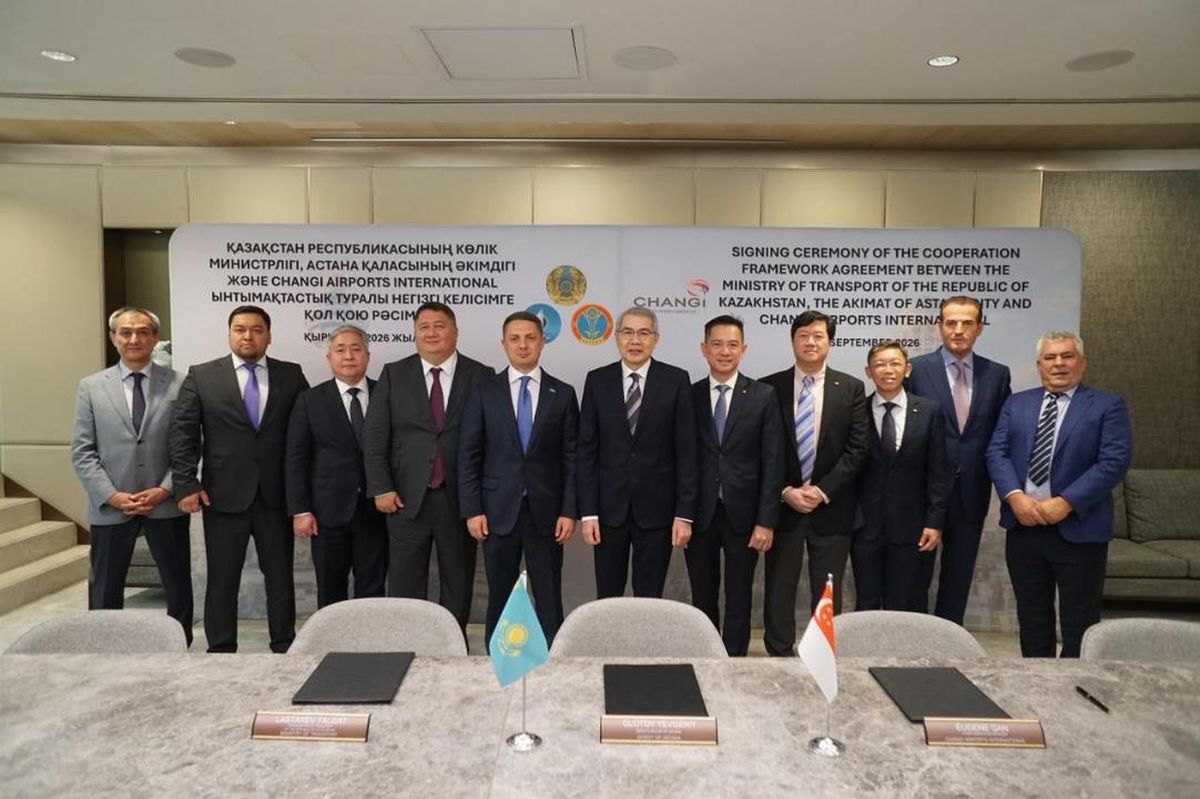
Changi Airports to participate in construction of new airport in Kazakhstan's Astana
24 September 2026
-

Saudi Arabia tenders Dariya-Afif road dualisation
23 September 2026
-

Contractors prepare Riyadh airport aviation complex bids
22 September 2026


 京公网安备
11010802030424号
京公网安备
11010802030424号  京ICP备19046776号-2