Lower Arun Hydro Project: 669 MW, $650M Build Begins
25 November 2026The Lower Arun hydro project has formally entered construction. On November 23, Indian Prime Minister Narendra Modi and Nepal’s Prime Minister Balendra Shah jointly laid the foundation stone for the 669 MW plant. They took part in a virtual ceremony from New Delhi, where Shah was on a two-day state visit.
What the Lower Arun hydro project involves
SJVN Lower Arun Power Development Company, a wholly owned subsidiary of India’s SJVN, is building the plant. It will have four generating units of 167.25 MW each. The estimated cost is ₹5,792.36 crore, which is about US$650 million, according to reports. Nepali media put the cost at NPR 92.67 billion. The project should generate about 2,901 million units of electricity a year, at a tentative tariff of ₹4.99 a unit. Commissioning is targeted for the 2030-31 financial year, and Nepal’s government says construction should finish within five years.
Who is building it?
Nepal awarded the project to SJVN through international competitive bidding on January 29, 2021. The two sides signed a project development agreement on June 1, 2023, under a build-own-operate-transfer model.
Contracts are already moving. DRA Infracon secured two civil engineering contracts worth about US$310 million combined, including more than 17 km of headrace tunnelling, according to a tunnelling trade report. In April, Patel Engineering emerged as the lowest bidder for Package 2, worth ₹1,593 crore, with a 54-month schedule.
The Lower Arun plant will work in tandem with SJVN’s 900 MW Arun-3 project, which lies upstream on the same river, about 35 km away. Water discharged from Arun-3 will feed Lower Arun, so the two plants share the same flow. In addition, the installed capacity grew from 474.25 MW to 669 MW during planning.
Under the agreement, Nepal receives 21% of the electricity free of charge. Nepali reports also describe a capacity royalty of NPR 400 per kW and a 7.5% energy royalty for 15 years after commercial operation starts. Therefore, the project supports Nepal’s energy security while giving India a larger power supply from its neighbor.
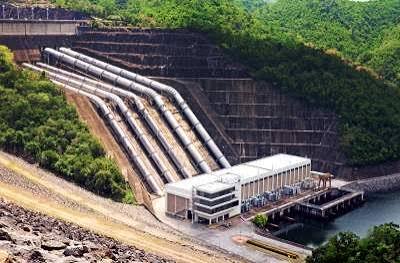
The plant will sit on the Arun River in Sankhuwasabha and Bhojpur districts, eastern Nepal.
What happens next?
The next steps are headrace tunnel excavation, powerhouse works, and the remaining civil packages. Watch for the Package 2 contract signing and for progress on tunnelling.
Related
-

Herne Bay Collector reaches major tunnelling milestone with launch of Domenica
25 November 2026
-

Kazakhstan to build nearly 1,700 4G and 5G base stations in 2027
25 November 2026
-

Delta Forge 1 Campus: $300M Loan Backs $3.6B Louisiana Build
25 November 2026
-

Geothermal drilling in Moszczenica, Poland expected to start in 2027
25 November 2026
-

Meralco, LRTA ink deal to prepare power infrastructure for 3 LRT-1 stations
25 November 2026
-

Repower Energy approves PHP 700M in additional subscriptions to hydro subsidiaries
25 November 2026
You might also like...
-
Geothermal drilling in Moszczenica, Poland expected to start in 2027
25 November 2026
-
Meralco, LRTA ink deal to prepare power infrastructure for 3 LRT-1 stations
25 November 2026
-

Técnicas Reunidas will execute three hydrogen-ready combined-cycle gas power plants for RWE in Germany
25 November 2026
-

Downer wins $728m Hunter Transmission Project contract in Australia
25 November 2026
-

Solarigo, Wisol, Ensto plan to build 461MWp Finnish solar plants
25 November 2026
-

Pre-feasibility study on geothermal cooling and heat pump project to kick off in Indonesia
24 November 2026


 京公网安备
11010802030424号
 京ICP备19046776号-2